The demand for simple house designs in Nepal has increased over the past few years. With growing urbanization, scarcity of land, and skyrocketing land rates, most Nepali families have started preferring homes that are small yet comfortable.
Homeowners are increasingly becoming conscious of minimalistic, practical, and earthquake-proof housing rather than big and luxurious houses. Simple houses don't just save money; they are also architecturally beautiful due to smart design, environmental friendliness, and efficient space management.
In this blog, we will discuss popular simple house design styles in Nepal, along with their features and reasons for popularity.
Nepal is a geographically diverse country with a rich culture, which is depicted through architecture. It is time to discuss the most common yet the most popular simple house architecture in Nepal with a fusion between traditions, modern dwelling, and affordability.
Some of the popular simple house designs in Nepal are:
Local houses in Nepal are made of materials that have been tested over centuries, representing the local culture and environment. They have been structured in accordance with the different climate and topography of Nepal.
Features:
Why Is It Popular: This style is famous due to its durability and cultural context. It is economical and uses locally accessible materials, which makes construction affordable and environmentally friendly.
Modern minimalist homes are focused on being simple, having clean lines, and being effective in space management. They are designed to be able to make maximum utilization of available land, coupled with an open, airy interior.
Features:
Why it’s Popular:
It is preferred because of its smooth, modern appearance and easy maintenance. This style is suitable in the urban areas where land is limited, suitable for young families and professionals.
The modern houses in the city merge the new aesthetic vibes with practical living needs. They are normally multi-storey buildings built to pursue the urban hectic lifestyle.
Features:
Why it’s Popular:
The style is appropriate for the expanding urban residents looking for stylish yet functional homes. It maximizes the use of space and provides modern amenities in the limited land in the city.
These houses are made out of reinforced concrete frames, providing durability and safety. They are convenient designs that can be used at any place, particularly in earthquake-prone areas like Nepal.
Features:
Why it’s Popular:
The RCC structure is preferred because it is very robust and resistant to earthquakes. It is affordable to maintain and can be used in urban and rural homes.
Bamboo houses provide a low-cost, eco-friendly means of housing using bamboo that grows quickly and is renewable. They are perfect for rural applications and environmentally friendly construction.
Features:
Why it’s Popular:
They are cheap and environmentally friendly, and that is why they are appealing to rural and tropical areas. Bamboo houses also have an excellent blend of nature and provide uniqueness in aesthetic views.
Bungalows are single-storey houses that provide easy access to all the rooms in case of a family with older people or kids. They are usually large, with emphasis being put on comfort.
Features:
Why It’s Popular:
Bungalows are common with families and retirees because of their convenience and accessibility. They are usually constructed on the outskirts or in the countryside with plenty of space for their use.
The greenhouses use technologies and sustainable designs to promote a decreased impact on the environment and energy costs. They aim for a healthy and eco-friendly living environment.
Features:
Why it’s Popular:
With increasing concern about the environment, there are homeowners who would like to save on utility and carbon footprint, and they are turning to greenhouses. Such popularity is increased by government incentive schemes for eco-friendly houses.
Semi-traditional urban houses have some features of Nepali vernacular buildings and modern construction methods. This mixed style allows for the maintenance of the cultural aesthetics and manages to make it more durable.
Features:
Why it’s Popular:
It is attractive to the people who wish to have a cultural identity, and are also expecting contemporary facilities. The style suits the urban environments, whereby classic appearances are appreciated.
Farmhouses are designed to have a wide open living in nature, that is built on huge plots, outside the city areas. They focus on comfort, leisure, and self-sustainability.
Features:
Why it’s Popular:
People who desire to have a quiet escape from urban life usually choose farmhouses. The connection with nature and the large space make their lifestyle relaxing.
Simple houses are all about smart design and effective building. These features concentrate on being as purposeful as possible without overusing local materials and ecological factors.
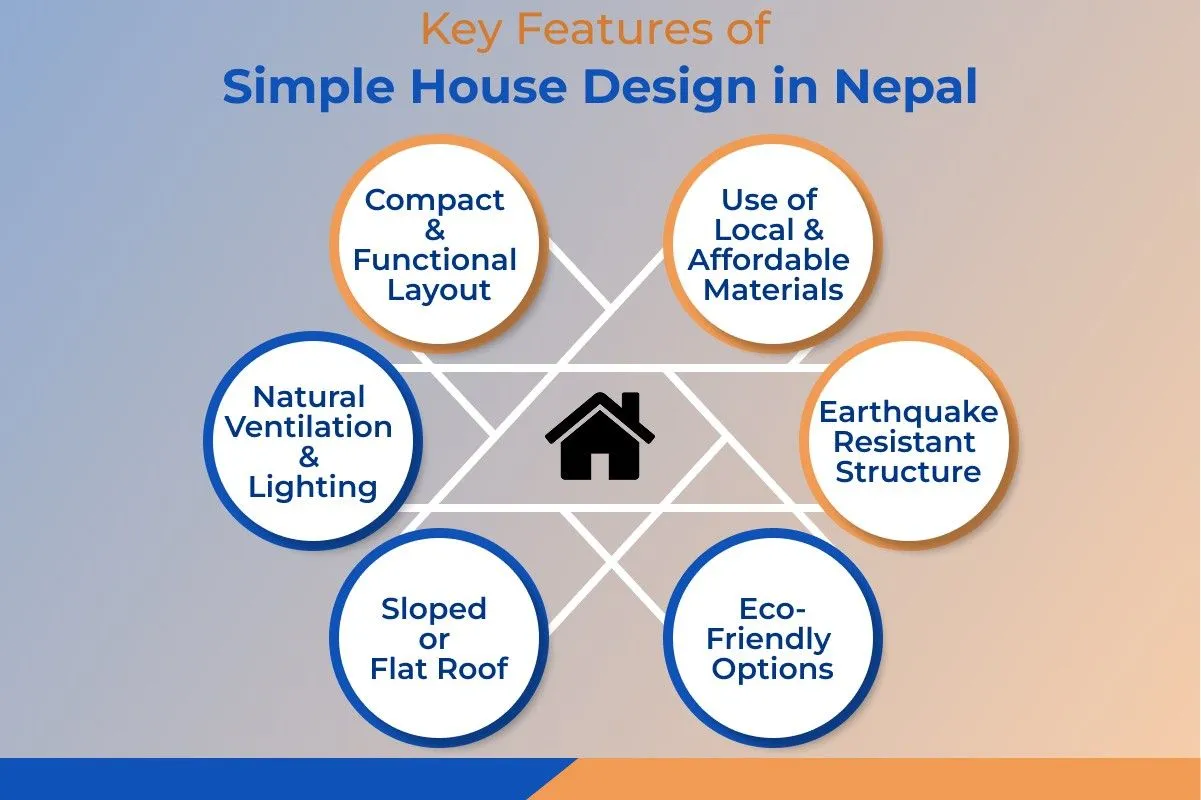
The following are some of the characteristics of a simple house in Nepal and why they are practical and affordable:
Whether you're building a simple, low-cost house in Nepal or dreaming of a modern, compact home in the city, there are countless design options to match your taste, location, and budget.
Choosing the right design can help you save money, reduce environmental impact, and enjoy a comfortable lifestyle. Before beginning construction, consult a local architect or construction expert to ensure your home is safe, aesthetic, and cost-efficient.
For custom-designed affordable homes in Nepal, contact Jadan Construction Group, your trusted partner in turning home dreams into reality.
Sloped roofs use CGI (Corrugated Galvanized Iron) sheets, while urban homes prefer concrete slabs. CGI is cheaper and ideal for monsoon resistance.
Use RCC framing, build a strong foundation, and avoid irregular floor plans. Follow the National Building Code of Nepal and consult a licensed engineer.
A 3-room simple house can start from NPR 15–25 lakhs, while a 4-room house may range between NPR 25–40 lakhs, depending on design, materials, and location. Modern urban designs can go higher.
Modern minimalist, bungalow, RCC box-type, and semi-traditional urban styles are currently in high demand, balancing affordability and design aesthetics.